

A leaking seal or a burst bag stops a line without warning. You pay for every stop in lost time and product.
This guide helps you choose polyethylene bags by product and machine.
Polyethylene bags are flexible bags made from polyethylene film. The film melts under heat, so the machine seals it into a pouch, a flat bag, or a gusseted bag. You can fill the finished bags with food, powder, or granules.
A VFFS machine forms bags from roll film on the line. The machine pulls the film, forms the tube, fills the product, and seals each bag. You should keep the film tension steady, so each seal stays centered.
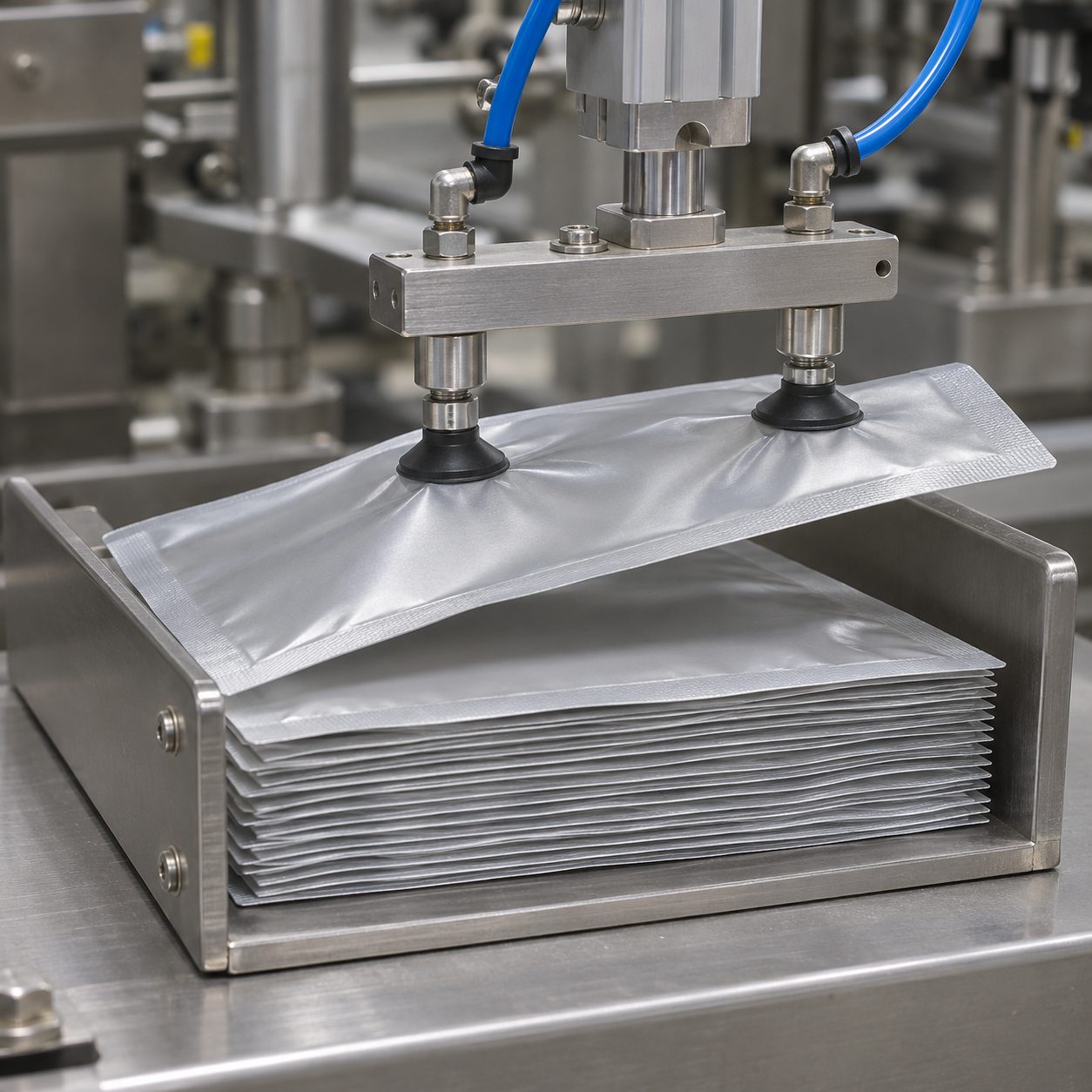
A premade bag machine picks bags one by one from a stack. The gripper opens each bag, the filler drops the product in, and the sealer closes the top. You should keep the stack dry and flat, so pickup stays smooth.
Two questions decide the choice. First, the product: weight, sharp corners, oxygen and moisture sensitivity, and freezing. Second, the machine: a VFFS machine or a premade bag machine.
The film type decides how a bag seals, resists punctures, and protects the product. Choose the film by product first, not by price, and the rest of the selection follows. Follow three steps to match the film to the product. Each film below fits both forms: roll film for a VFFS machine, or flat bags for a premade bag machine.
A soft LDPE bag stretches easily and seals at low heat. Start with it for light products with no sharp corners. Order the film as roll film or flat bags, then fill a sample bag and drop it once. If the seal splits, move to a tougher film.
A tough HDPE bag resists punctures and holds heavy products safely. Weigh the product first and check every corner for sharp points. Run a sample bag, as roll film or flat bags, through a drop and stacking test. If the bag survives, the film passes for your product.
A strong coextruded film combines layers for barrier, strength, and sealability. Choose it when the product needs oxygen and moisture protection. Check the inner seal layer in a sample run first, in roll film or flat bags. If the seal holds after storage, the bag passes.
| Material | Sealing Temperature (Typical) | Heat Resistance | Best For |
|---|---|---|---|
| LDPE | 120–160°C | Low | Snacks, frozen foods, light powders |
| LLDPE | Confirm by sample test | Medium | Stretchable bags, liners, medium loads |
| HDPE | Confirm by sample test | High | Heavy products, hardware, sharp items |
| Coextruded film | Confirm by sample test | High | Sensitive foods needing barrier protection |
Use the table only to shortlist one film. Then run a sample bag on the machine before bulk orders. Before ordering, confirm one use first: vacuum packing needs a coextruded film, and recycling depends on local rules.
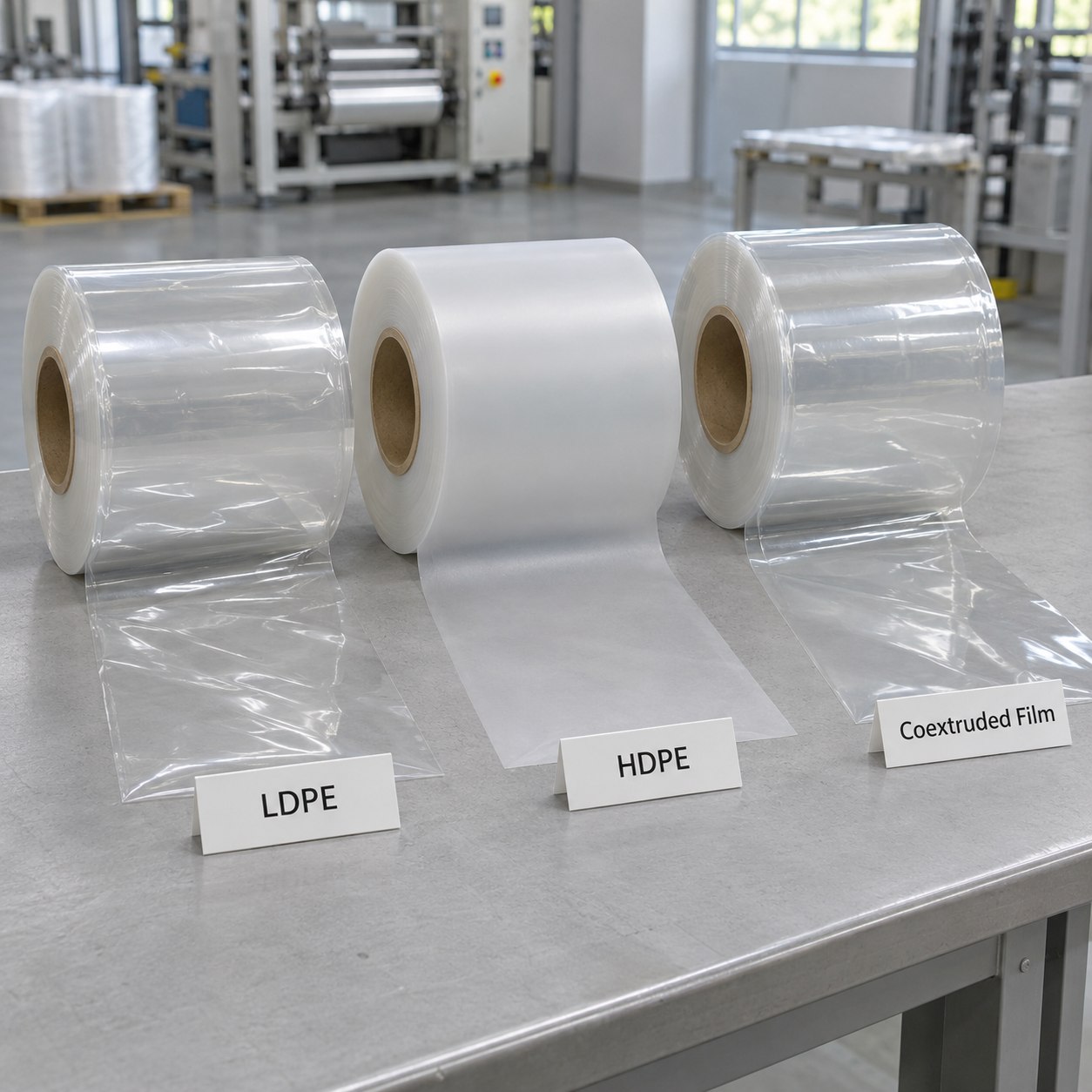
Each feature changes what the bag can do on the line. A good feature helps the product, and a wrong one causes leaks or breaks. Read each feature below, then note what it means for your choice.
A soft film stretches without tearing, so the bag survives handling and drops. It also seals at low heat, so thin films keep their strength. For your choice, this means light products with no sharp corners can use a softer, cheaper film. It fits both machine forms: roll film for a VFFS machine, or flat bags for a premade bag machine.
A tough film resists sharp corners and heavy loads without puncturing. It stays stiff on a fast filling machine and keeps its shape. For your choice, this means heavy or sharp products need this film, even when it costs more. Both machine forms work: roll film on a VFFS machine, or flat bags on a premade bag machine.
A multilayer film blocks oxygen and moisture, so sensitive foods stay fresh longer. The outer layer prints clearly, while the inner layer seals firmly. For your choice, this means foods that spoil fast need a coextruded film, not a single-layer bag. Order it as roll film for VFFS, or as flat bags for a premade bag machine.
Many products share one bag type, and each product needs a different bag. Match the bag to the product type first, then check the film. The groups below show where each bag fits. Each group below also names its machine form: roll film or flat bags.
Snacks, light powders, and frozen foods run well in soft LDPE bags. The film seals at low heat and stays flexible in cold storage. You should start with LDPE here, and move up only when a sample fails. They run as roll film on a VFFS machine, or as flat bags on a premade bag machine.
Heavy products, hardware, pet food, and granules need tough HDPE bags. The stiff film resists punctures and holds the load without tearing. You should test a filled bag with a drop test before bulk orders. Order them as roll film for VFFS, or as flat bags for a premade bag machine.
Sensitive foods need a coextruded film that blocks oxygen and moisture. The barrier layer keeps flavour and freshness through storage and transport. You should confirm the seal after storage, so the barrier still works at delivery. It runs as roll film on a VFFS machine, or as flat bags on a premade bag machine.
Selection follows two lines: product first, then machine. Work through the three checks below in order, and stop when a sample passes.
Start with the product data: weight, size, and sharp corners. Match the film to that data, then test thickness in 25-micron steps. Run each sample through a drop, stacking, and transport vibration check.
Pass the polyethylene bags only when no bag bursts or tears at the sealing jaws. If a sample fails, add one 25-micron step and test again, and never jump straight to the thickest film.
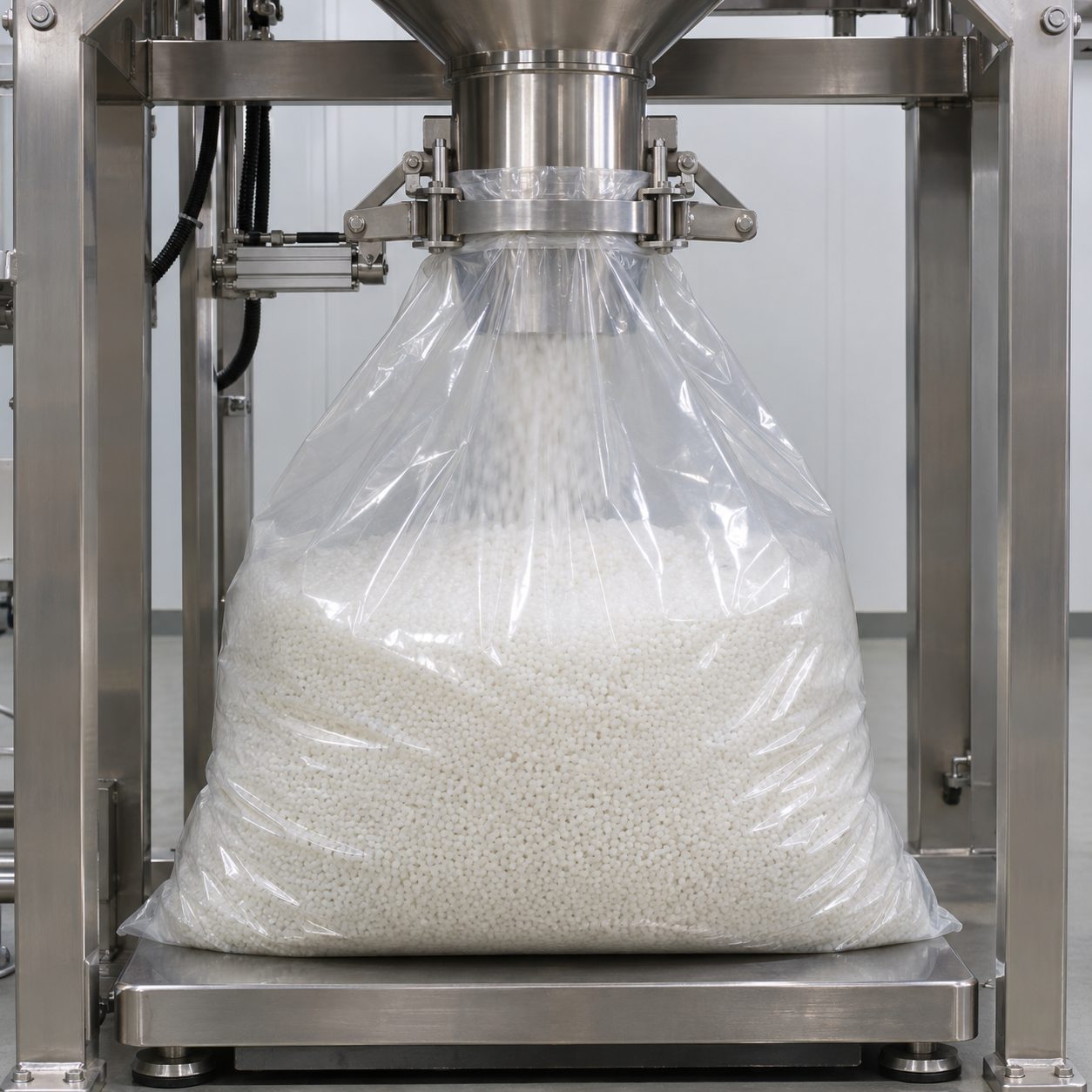
Set the sealing window for polyethylene bags inside the LDPE range: 120–160°C, 0.3–0.5 MPa, and 0.5–1.5 seconds. Raise the temperature by about 5–10°C for each extra 25 microns of thickness. Test the seal after each change: a leaking seal needs more heat, and a burnt film needs less.
Strength is not seal integrity, so a strong seal can still leak. Cut a 25.4 mm strip from a sealed bag first. Pull the strip at 200–300 mm per minute and record the peak force. Compare the result with the minimum in your order, and retest after every window change.
For a VFFS machine, check film tension first when the web starts to drift. Next, inspect the forming tube for wear and alignment. Reset the tracking, then run a short sample: the seal must stay centered on all polyethylene bags. If drift returns, stop the line and inspect the tube again before you run more bags.
A premade bag machine picks polyethylene bags one by one, opens each bag, and fills it in sequence. Keep the bag stack dry and flat before loading. The gripper holds the bag mouth open, so powder and granules fall cleanly inside. Load one stack, run a sample, and watch the pickup: a missed bag means the stack needs flattening or drying.
The final check matches the product line with the machine line. Read the table, then prove the match with a sample run.
| Product | Machine | Film |
|---|---|---|
| Light foods and powders | VFFS machine (roll film) | LDPE roll film |
| Heavy and sharp products | Premade bag machine (flat bags) | HDPE flat bags |
| Sensitive foods needing barrier | VFFS or premade bag machine | Coextruded film, roll film or flat bags |
Run the matched sample on the real machine. Pass it only when the seal stays centered, no bag bursts or tears, and the seal holds after storage. If it fails, return to the product check or the machine check and test again.
A bag must fit the product and the machine, or it fails on the line. Choose by product, match by machine, and polyethylene bags will protect your product on every run. Talk to LINK Machinery for a machine that fits the bag and product.
1. Can polyethylene bags hold liquids?
Yes, for short runs. You should choose a thick, leak-tested bag and, for example, keep fill levels below 80% to protect the seal.
2. How do you set the thickness of polyethylene bags?
Start from the lightest safe film and move up one grade only after a failure. For polyethylene bags, a 5 kg load, for example, needs a thicker film than a 500 g load.
3. Can polyethylene bags be vacuum packed?
Yes, if the film suits vacuum sealing. Choose a coextruded bag for polyethylene bags, and test the seal, for example, after 24 hours of storage.
4. Are polyethylene bags recyclable?
LDPE and HDPE bags are widely recyclable where facilities exist. You should confirm local rules first, for example, and keep food residue below 5% by weight.
5. Why do polyethylene bags drift on a VFFS machine?
Uneven film tension and a worn forming tube cause most drift. You should check tension first, for example, and reset the tracking after every 500 bags.
6. How do polyethylene bags handle freezing?
LDPE stays flexible in cold storage, while HDPE turns brittle below freezing. You should test filled bags at, for example, minus 18°C for 24 hours.
7. How do you write seal strength in an order for polyethylene bags?
State the test method, strip width, and minimum value clearly. You should write, for example, ASTM F88, 25.4 mm strip, and a minimum of 5 N per 15 mm.

อีเมล : Molly@xmlk-machine.com
ส่งอีเมลถึงเรา
Room 810, No. 35-2 Xinjing Road, Haicang, Xiamen, Fujian, China
ที่อยู่ของเรา
โทร : +86 18150150881
Whatsapp : +8618150150881
โทรหาเรา


 ไทย
 English
 français
 português
